
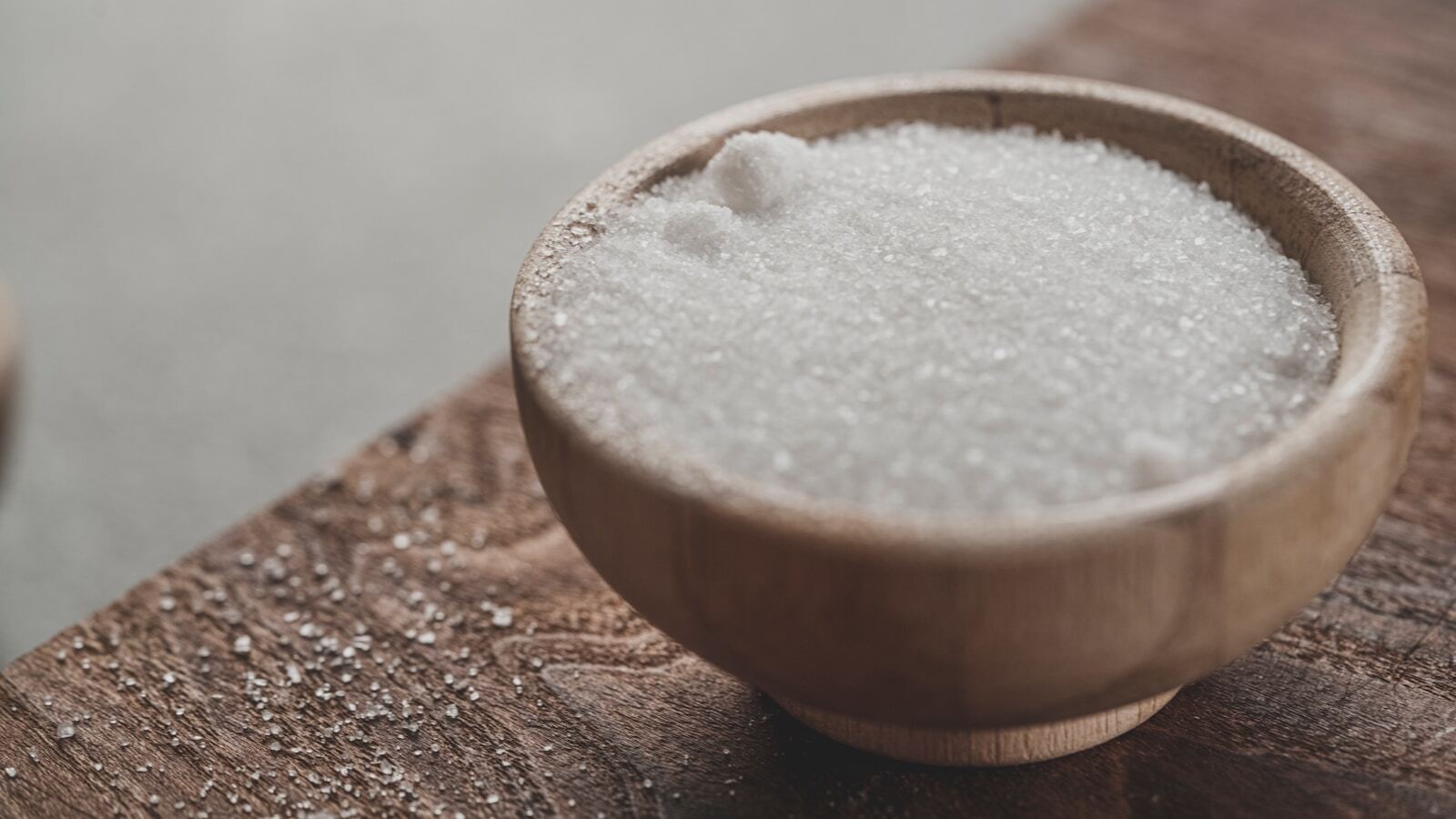
Trên nhãn nhiều sản phẩm, bạn thấy cụm “đường kiêng” mà không biết đó là loại gì. Erythritol, allulose và monk fruit đều có GI bằng 0, nhưng hành xử khác nhau trong chế biến và trên lưỡi. Bài này so sánh ba loại bằng số liệu, không bằng tính từ. Đọc trong 5 phút.
Ba loại đường kiêng, một điểm chung
Cả ba đều là chất tạo ngọt không đường tinh luyện. GI bằng 0. Không làm tăng đường huyết đáng kể. Gần 0 calo. Đó là điểm chung.
Nhưng nguồn gốc, hậu vị, và hành vi khi nấu nướng của từng loại khác nhau hoàn toàn. Đây là lý do phối trộn nhiều loại thường cho kết quả tốt hơn dùng đơn độc.
Erythritol, nền ngọt ổn định, hậu vị lạnh
Erythritol là polyol (nhóm rượu đường) được sản xuất bằng cách lên men glucose tự nhiên, thường từ ngô hoặc sắn.
Độ ngọt bằng 60 đến 70% đường mía. Calo gần bằng 0, dưới 0.4 kcal mỗi gam theo FDA. Không tác động đến glucose hoặc insulin huyết thanh (PubMed 8039489).
Đặc trưng rõ nhất của erythritol là hậu vị lạnh. Nguyên nhân là negative heat of solution cao, tức là khi tan trong nước nó hút nhiệt từ môi trường, tạo cảm giác mát trên lưỡi.
Trong chế biến, erythritol không tham gia phản ứng Maillard. Bánh dùng erythritol đơn thuần sẽ ít vàng hơn 23 đến 34% so với dùng đường thường (ScienceDirect, 2024). Khi cần màu vàng tự nhiên cho bánh, erythritol đơn thuần không đủ.
Erythritol phù hợp cho: nền ngọt ổn định trong thức uống, sản phẩm không yêu cầu browning.
Allulose, monosaccharide hiếm, hành xử gần đường thường nhất
Allulose là monosaccharide tự nhiên, có trong sung, nho khô và mật ong với hàm lượng rất nhỏ. Trong sản xuất công nghiệp, allulose được chuyển hoá từ fructose bằng enzyme.
Độ ngọt bằng 70% đường mía. Calo 0.2 đến 0.4 kcal mỗi gam. GI bằng 0. Thực tế allulose còn làm giảm phản ứng glucose sau bữa ăn so với nhóm chứng (PubMed 36678329, 2023).
Điểm khác biệt lớn nhất: allulose THAM GIA phản ứng Maillard. Bánh dùng allulose vàng đều, màu sắc gần với đường thường. Đây là tính năng không loại đường kiêng nào khác trong nhóm này có.
Allulose không có hậu vị lạnh như erythritol, khiến vị ngọt tổng thể tự nhiên hơn.
Allulose phù hợp cho: sản phẩm nướng cần màu vàng, texture bánh gần với đường thường, bù trừ hậu vị lạnh của erythritol.
Monk fruit, ngọt gấp 100 đến 250 lần, lượng dùng cực nhỏ
Monk fruit (Siraitia grosvenorii) có gốc miền nam Trung Quốc. Chất ngọt chính là mogroside V. FDA công nhận monk fruit GRAS từ 2010 (GRN 301), GRN 522 năm 2014.
Độ ngọt gấp 100 đến 250 lần đường mía. 0 calo. GI bằng 0. Vì cường độ ngọt cao, lượng dùng cực nhỏ, thường vài chục miligam mỗi sản phẩm.
Monk fruit hợp làm chất tạo ngọt cuối cùng, thêm độ ngọt mà không thêm khối lượng nguyên liệu. Vai trò utility trong công thức kết hợp.
Vì sao kOBE phối trộn cả ba
Mỗi loại có điểm mạnh riêng. Phối trộn xử lý từng yếu điểm:
(a) Erythritol làm nền (đa số khối lượng), giá thành thấp hơn 2 loại kia, vị ngọt ổn định.
(b) Allulose bù hậu vị lạnh của erythritol và tạo browning khi nướng.
(c) Monk fruit thêm cuối, đẩy ngọt lên mức gần đường mía mà không tăng khối lượng.
Công thức kOBE thường có tỉ lệ erythritol 70%, allulose 20%, monk fruit extract 10% (theo khối lượng). Tỉ lệ này có thể điều chỉnh theo từng sản phẩm.
Tham khảo
(1) FDA Sugar Alcohols guidance, calorie content polyols.
(2) FDA GRAS Notice 301 (2010) và 522 (2014), monk fruit và allulose.
(3) PubMed 8039489, erythritol metabolism in healthy humans.
(4) PubMed 36678329, allulose lowers postprandial glucose response.
(5) ScienceDirect 2024, sugar alcohols in baked products: Maillard behavior.
English version
How erythritol, allulose, monk fruit differ
Most “no added sugar” labels don’t tell you which sweetener is inside. Erythritol, allulose and monk fruit all have GI of 0, but behave very differently in the kitchen and on the palate. This post compares all three with data, not adjectives. Five minutes.
Three sweeteners, one shared property
All three are non-refined-sugar sweeteners. GI = 0. No significant blood glucose impact. Near-zero calories. That’s where the similarities end.
Their origins, aftertastes, and cooking behavior are entirely different. That’s why blending multiple types tends to produce better results than using any single one alone.
Erythritol: stable sweetness base with a cooling aftertaste
Erythritol is a polyol produced by fermenting natural glucose, typically from corn or cassava.
Sweetness is 60 to 70% of table sugar. Calories are near zero, below 0.4 kcal/g per FDA. It does not affect serum glucose or insulin (PubMed 8039489).
The most distinctive characteristic of erythritol is its cooling aftertaste. The cause is a high negative heat of solution: when it dissolves, it absorbs heat from the environment, producing a cooling sensation on the palate.
In baking, erythritol does not participate in the Maillard reaction. Products made with erythritol alone brown 23 to 34% less than those made with regular sugar (ScienceDirect, 2024). When natural browning color is required, erythritol alone is not sufficient.
Best suited for: stable sweetness base in beverages, products where browning is not required.
Allulose: the rare monosaccharide that behaves most like regular sugar
Allulose is a naturally occurring monosaccharide found in figs, raisins, and honey in very small quantities. In industrial production, it is enzymatically converted from fructose.
Sweetness is 70% of table sugar. Calories are 0.2 to 0.4 kcal/g. GI = 0. Allulose actually reduces postprandial glucose response compared to a control (PubMed 36678329, 2023).
The most significant difference: allulose participates in the Maillard reaction. Baked goods made with allulose brown evenly, with color output close to regular sugar. No other sweetener in this category shares this property.
Allulose has no cooling aftertaste like erythritol, making the overall sweetness feel more natural.
Best suited for: baked goods requiring browning, products where texture should be close to regular sugar, offsetting erythritol’s cooling effect.
Monk fruit: 100 to 250 times sweeter, used in very small amounts
Monk fruit (luo han guo) refers to the dried fruit of Siraitia grosvenorii, native to southern China. The fruit is harvested, dried, and extracted for its mogrosides.
The primary sweetening compound is mogroside V. Sweetness is 100 to 250 times that of table sugar (FDA GRAS GRN 522, 2014). Zero calories. GI = 0. FDA recognized monk fruit as GRAS in 2010 (GRN 301).
Because of its high sweetness intensity, very small amounts are used in formulations. Monk fruit is typically blended with erythritol or allulose to balance sweetness and texture.
Why blending produces better results than using one alone
No single sweetener is perfect on its own.
- Erythritol alone: stable and clean, but with a noticeable cooling aftertaste and reduced browning.
- Allulose alone: excellent browning, no cooling, but slightly higher caloric density and limited availability in Vietnam.
- Monk fruit alone: 100-250x sweetness intensity, but difficult to dose accurately and needs a base from another sweetener.
Blending all three allows each to compensate for the others’ weaknesses. Erythritol provides the stable sweetness base. Allulose offsets the cooling aftertaste and supports texture. Monk fruit amplifies total sweetness without adding bulk.
kOBE formulas typically use erythritol 70%, allulose 20%, monk fruit extract 10% by weight. The ratio can be adjusted by product.
Frequently asked questions
Are these three sweeteners recognized as safe? All three have FDA GRAS status (Generally Recognized As Safe). Erythritol and allulose have clinical research backing. Monk fruit has a centuries-long history of use in China.
Are they suitable for people avoiding sugar? All three have GI = 0. kOBE uses the phrase “suitable for people avoiding sugar” and does not make medical claims.
Why blend three instead of using one? Each has a distinct strength. Erythritol provides the base sweetness. Allulose handles browning and texture. Monk fruit delivers high sweetness intensity at low volume. Blending compensates for each sweetener’s weaknesses.
Can consuming these cause digestive issues? Erythritol at high doses, above 50g per day, may cause mild digestive discomfort. Allulose and monk fruit are less likely to cause issues at typical food-use levels.